Why India Is a Strategic Destination for Home Decor Sourcing
How India combines craftsmanship, innovation and scalable manufacturing for global home decor sourcing
The global Home Decor industry is evolving rapidly. Retailers, wholesalers, e-commerce brands and interior design businesses are no longer looking for manufacturing partners based solely on cost. Today, sourcing decisions are increasingly influenced by supply chain resilience, product differentiation, sustainability and the ability to respond quickly to changing consumer trends.
As businesses diversify their sourcing strategies, Home Decor sourcing India has become more than an alternative manufacturing option—it has become a strategic business decision. India's combination of skilled craftsmanship, scalable production capabilities and strong export ecosystem enables buyers to develop distinctive collections while building long-term, reliable supply chains.
Whether sourcing handcrafted decorative accessories, furniture, lighting or home textiles, international buyers benefit from access to experienced manufacturers capable of producing both bespoke collections and high-volume retail programmes. Combined with extensive export expertise and a diverse supplier network, India continues to strengthen its position as one of the world's preferred sourcing destinations for Home Decor.
Why Global Buyers Are Diversifying Their Home Decor Supply Chains
The global sourcing landscape has changed considerably over the past few years. Rather than relying on a single manufacturing destination, many international buyers are adopting multi-country sourcing strategies to improve flexibility and reduce supply chain risks.
India has become an increasingly important part of these strategies because it offers:
-
A broad manufacturing ecosystem across multiple Home Decor categories
-
Skilled craftsmanship combined with modern production capabilities
-
Access to natural, sustainable and responsibly sourced materials
-
Flexible manufacturing suitable for both small and large production runs
-
Growing investment in design innovation and product development
-
Well-established export infrastructure serving global markets
For procurement teams and buying managers, India offers more than competitive manufacturing costs. It provides an opportunity to develop differentiated collections while improving sourcing resilience and reducing dependency on a single production market.
India’s Home Decor Manufacturing Landscape
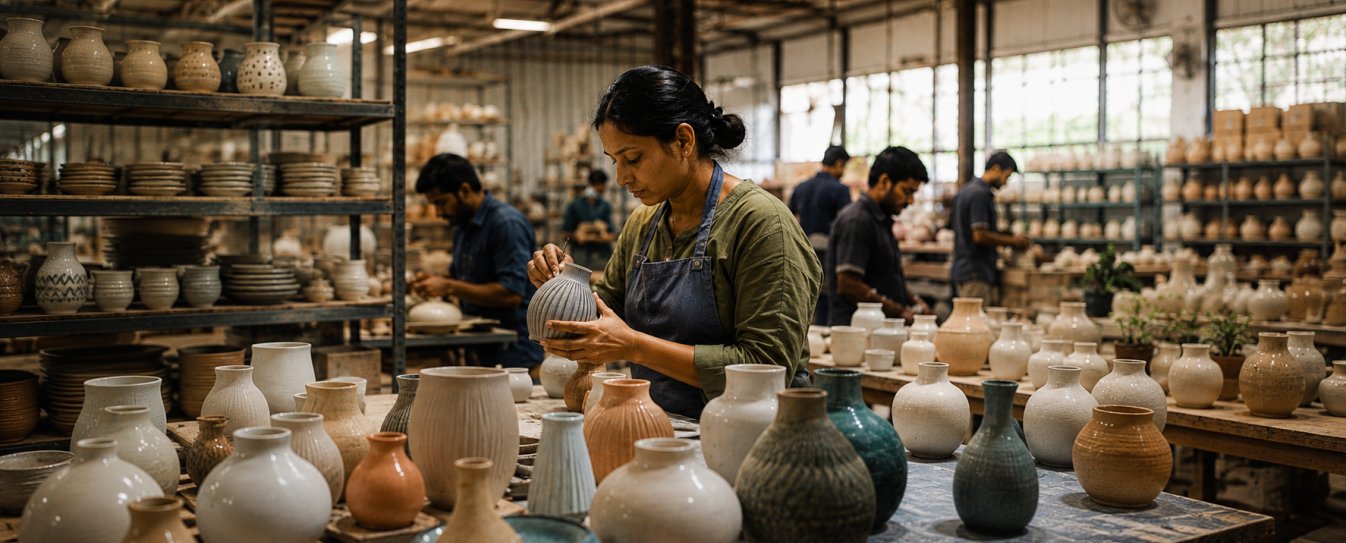
India has developed one of the world's most diverse Home Decor manufacturing ecosystems, supplying retailers, importers, wholesalers and lifestyle brands across Europe, the UK, North America, Australia and the Middle East.
From decorative accessories and furniture to lighting, mirrors and home textiles, Indian manufacturers support a wide range of product categories for international markets. Many suppliers combine traditional artisan skills with advanced production technologies, allowing them to produce handcrafted collections alongside scalable retail programmes. This flexibility enables buyers to source multiple product categories from a single destination while maintaining consistent quality, design standards and production efficiency.
Many Indian Home Decor manufacturers also work closely with international brands on private-label programmes, exclusive collections and customised product development. Their experience in exporting to global markets means they understand international quality expectations, compliance requirements and retail standards.
Key Strengths of India's Manufacturing Ecosystem
-
Extensive experience serving international retail markets
-
Skilled workforce combining traditional craftsmanship with modern manufacturing
-
Wide supplier network across multiple Home Decor categories
-
Flexible production capabilities for small, medium and high-volume orders
-
Growing investment in automation, quality assurance and sustainable manufacturing
-
Strong understanding of international export and compliance requirements
Key Home Decor Product Categories
India offers one of the broadest Home Decor product portfolios available from a single sourcing destination. This enables buyers to consolidate sourcing, simplify supplier management and create coordinated product collections across multiple categories.
Rather than sourcing products from several countries, retailers can work with specialised manufacturers across India to build complete lifestyle collections that reflect their brand positioning and customer preferences.
|
Product Category |
Popular Products |
|
Decorative Accessories |
Vases, trays, candle holders, sculptures, decorative bowls |
|
Wall Decor |
Mirrors, wall art, wooden panels, metal wall Decor |
|
Lighting |
Table lamps, pendant lights, lanterns, floor lamps |
|
Decorative Furniture |
Side tables, console tables, shelving, accent stools |
|
Soft Home Decor |
Cushions, throws, table runners and decorative textiles |
For international buyers, the advantage extends beyond product variety. India's manufacturing ecosystem enables businesses to create coordinated collections with consistent finishes, materials and quality standards while streamlining sourcing and logistics.
Many manufacturers also produce complementary lifestyle products, allowing brands to expand collections without establishing relationships with multiple suppliers across different countries.

Materials and Craftsmanship
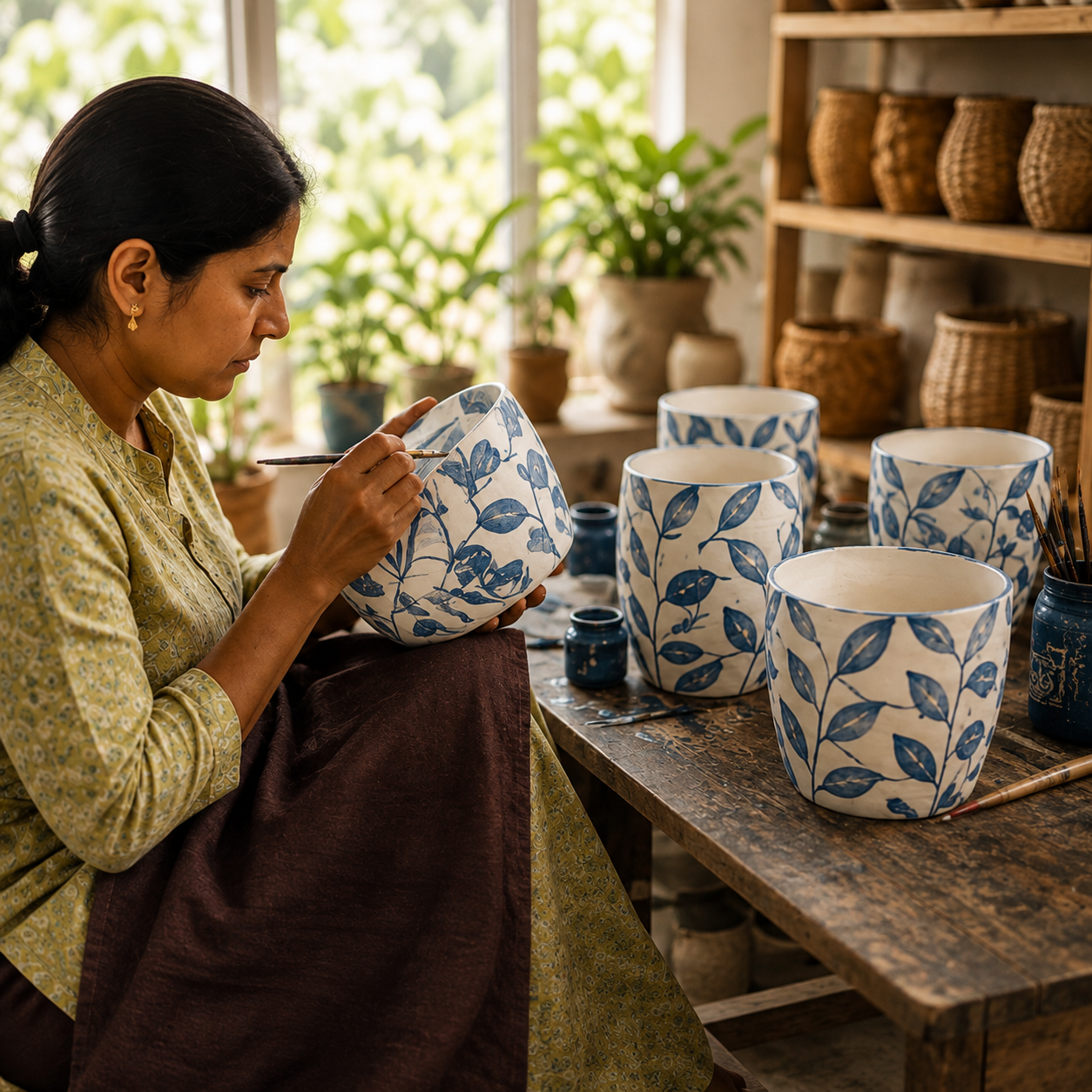
One of India's greatest strengths lies in the combination of diverse raw materials and generations of skilled craftsmanship. This unique blend enables manufacturers to create products that appeal to both contemporary and heritage-inspired Home Decor markets. Manufacturers work with a wide range of materials including mango wood, acacia wood, brass, aluminium, marble, ceramics, glass, jute, bamboo and other natural fibres. These materials support growing consumer demand for sustainable, authentic and design-led products.
Beyond the materials themselves, India's artisan heritage continues to differentiate its Home Decor industry. Techniques such as wood carving, brass casting, ceramic glazing, marble inlay, hand painting and metal embossing add character and craftsmanship that are increasingly valued by retailers seeking products with authentic stories.
For brands looking to differentiate their collections, this combination of craftsmanship and scalable manufacturing provides an opportunity to balance uniqueness with commercial production requirements.
Common Materials
-
Mango Wood
-
Acacia Wood
-
Brass
-
Aluminium
-
Marble
-
Ceramic
-
Glass
-
Jute
-
Bamboo
-
Natural Fibres
Product Customisation and Collection Development
Today's retailers are looking beyond catalogue products. They want exclusive collections that reflect their brand identity, respond to seasonal trends and offer consumers something distinctive.
One of the key advantages of Home Decor sourcing India is the ability to collaborate with manufacturers throughout the product development process. Many suppliers work alongside buyers to refine concepts, develop prototypes and produce collections tailored to specific retail markets.
Rather than simply manufacturing existing designs, many suppliers now support:
-
Private-label programmes
-
Exclusive retail collections
-
Seasonal product launches
-
Trend-led product development
-
Sustainable material selection
-
Retail-ready packaging
-
Product engineering and cost optimisation
This collaborative approach allows brands to shorten product development cycles while bringing differentiated collections to market more efficiently.
Customisation Options
-
Bespoke product design
-
Custom dimensions and specifications
-
Alternative materials and finishes
-
Brand-specific colours
-
Private-label branding
-
Retail-ready packaging
-
Seasonal and trend-led collections
-
Exclusive product development
Manufacturing Clusters and Regional Strengths
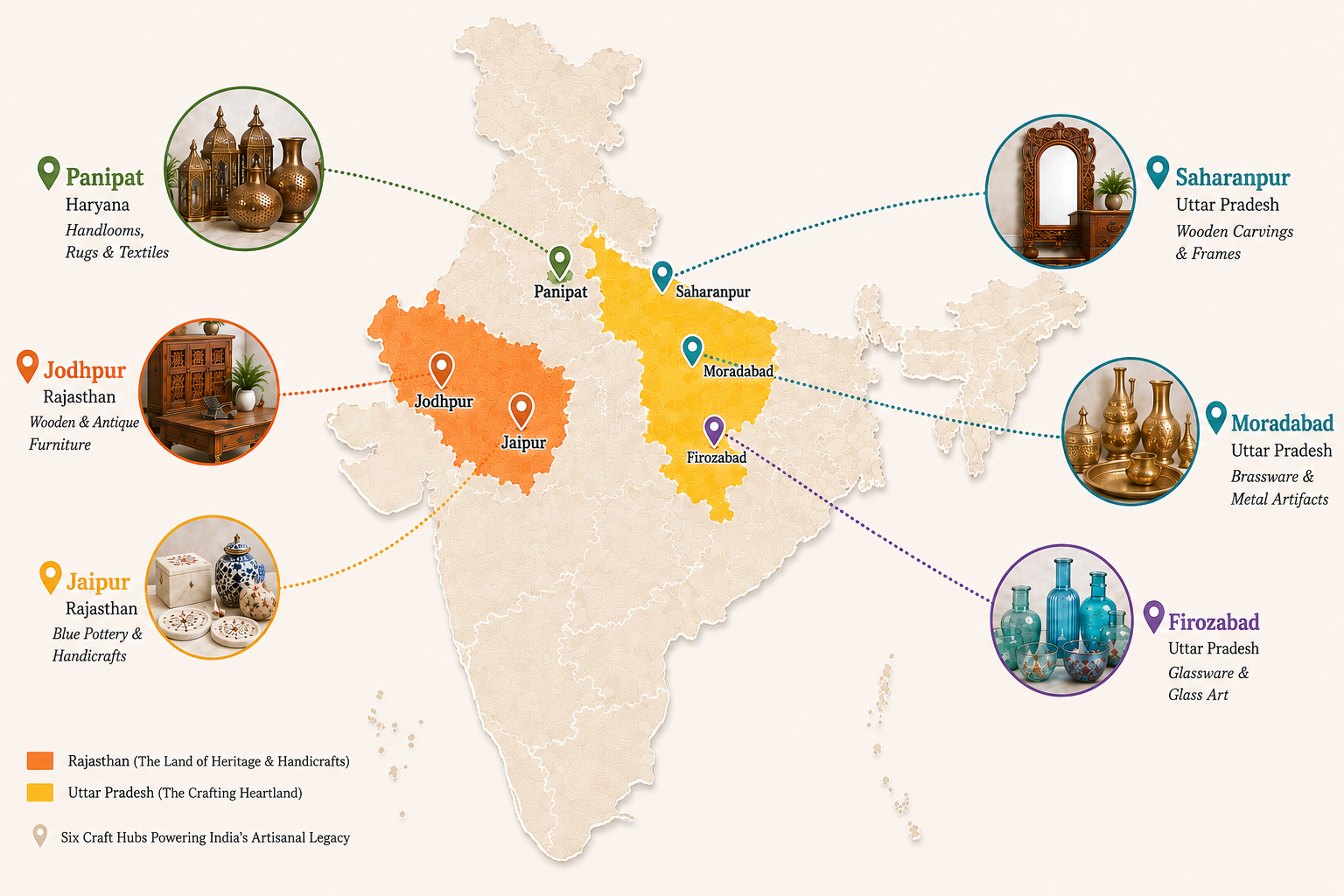
India’s home decor industry has special areas where making things is done. Each of these areas is known for making types of products and using certain materials. These places have been growing for years making a strong group of makers, skilled workers and good ways of making things. For people who buy from countries this means they can work with makers who know a lot about the products they make and it makes it easier to pick the right makers and make the products they want.
Regional Manufacturing Strengths
• Moradabad: Making things from metal, brass and lanterns
• Jodhpur: Making furniture and decorative items
• Jaipur: Making things from marble, ceramics and hand-made items
• Saharanpur: Making carved wood, mirrors and furniture
• Panipat: Making cushions, blankets and home textiles
• Firozabad: Making things from glass and glass items
Why International Buyers Choose India
As the way companies get things from other countries keeps changing more companies are looking beyond the usual places to make things to have more stable and different ways to get their products. India gives a mix of making things experience in sending things to other countries many kinds of products and good prices which makes it a good place to get things from for stores, makers and people who bring things in from other countries. The ability to make both hand-made and big amounts of products also helps buyers have choice when they want to make more products or get into new places.
Beyond making things buyers benefit from working with makers who know the rules for making things in countries what they need to follow and what paper work they need to do. Many makers who send things to countries have worked with big stores for a long time and keep spending money on new ideas, better materials and new ways of making things. These strengths help buyers have risk when getting things while still having good quality and reliable delivery.
Buyer Benefits
• Many different types of products to choose from
• Ability to have orders
• Makers who know how to send things to other countries
• New ideas and products that follow trends
• Working with makers for a long time
• Prices that are good and quality that is good
How Local Sourcing Expertise Supports Buyers
Finding the right maker is just one part of a good way to get things. International buyers also need to be sure that the makers they work with can keep the quality good make the things on time and follow the rules. Managing the talks with the makers getting samples checking the factories and watching the making process from another country can be hard when working with many different makers. A good person who helps with getting things makes it easier by giving knowledge connections with makers and help when they need it during the whole process of getting things.
Along with finding the makers the help of people who know how to get things adds value by making it easier to see what is happening at every step. From looking at how the makers can make things helping with making the products checking the quality and getting the products ready to send the people who help with getting things make it less risky and make the way of getting things better. This lets stores, makers and brands focus on making products and growing their business while making sure the orders are delivered as they should be with the right looks, quality and on time.
Typical Sourcing Support Includes
-
Finding and checking makers
-
Checking how good the factories are
-
Getting samples and helping with making products
-
Watching how the products are made
-
Checking the quality of the products
-
Helping with how the products are wrapped and meeting the rules
-
Helping with sending the products
Companies that want to get home decor from India can get help from a person who knows how to get things and has good connections with makers. 3SGlobal helps get things done helping international buyers find makers manage making the products check the quality and send the products, which helps businesses build good and long-term ways to get things with confidence.
India keeps getting better at being one of the places to get home decor from mixing good hand-made skills many ways to make things and a lot of experience in sending things to other countries. From hand-made decorations to sales groups the country gives people from all over the world access, to a big group of makers who can work for small brands and big stores. As companies keep changing how they get their things getting from India helps with choice, new ideas and long-term business value.
Choosing the person to help with getting things can make getting things faster by making it easier to find makers make new products check quality and send things. With a lot of experience working with makers and people who send things from India 3SGlobal helps stores, makers and brands get home decor products through good maker connections and full help with getting things that fit what the business needs.
Frequently Asked Questions
1. Why do international buyers get home decor products from India?
India has become one of the sourcing destinations for home decor because it offers a combination of skilled craftsmanship, competitive manufacturing, diverse product categories and extensive export experience. Buyers can source accessories, furniture, lighting, wall decor and soft furnishings from experienced manufacturers capable of producing both handcrafted and large-volume collections. In addition to production costs India provides access to natural materials, flexible customisation options and suppliers familiar with international quality standards. These advantages help retailers, wholesalers and brands build product collections while strengthening supply chain resilience and reducing dependence on a single sourcing destination.
2. What types of home decor products can buyers source from India?
Indian manufacturers produce a range of home decor products suitable for retailers, wholesalers, interior designers and hospitality businesses. Popular categories include accessories, mirrors, wall decor, lighting, decorative furniture, soft furnishings, storage baskets, marble decor, glassware and seasonal collections. Many suppliers also offer coordinated product ranges that enable buyers to develop lifestyle collections rather than purchasing individual items from multiple countries. This broad manufacturing capability makes India an attractive destination for businesses seeking variety, consistent quality and efficient sourcing.
3. Can Indian manufacturers customise home decor products?
Yes. Many Indian Home Decor manufacturers offer customisation services to help buyers create exclusive collections that reflect their brand identity and target market. Common options include labelling, custom colours, alternative materials, bespoke finishes, product dimensions and retail packaging. Manufacturers also support collections, trend-led product development and exclusive designs for specific retail programmes. This flexibility enables businesses to launch collections while maintaining quality consistency and responding more effectively to changing consumer preferences.
4. How does a sourcing partner help buyers?
An experienced sourcing partner simplifies the procurement process by managing activities that can be difficult to coordinate. These include supplier identification, factory evaluation, sampling, production monitoring, quality inspections, packaging coordination and logistics support. By providing expertise and direct communication with manufacturers a sourcing partner helps reduce sourcing risks improve product consistency and resolve production issues before they affect delivery schedules. This allows buyers to focus on product development, sales and business growth while ensuring a sourcing experience.
5. How can buyers find home decor manufacturers in India?
Finding suppliers requires more than online research. Buyers should evaluate manufacturers based on production capability, export experience, quality management systems, product expertise and compliance with standards. Visiting factories reviewing samples and conducting quality inspections are also steps before placing larger orders. Many businesses choose to work with an established sourcing company such as 3SGlobal, which already has relationships with trusted manufacturers, across India’s leading production regions. This approach helps buyers identify suppliers streamline sourcing and build long-term manufacturing partnerships with confidence.

 Privacy Policy
›
Privacy Policy
›