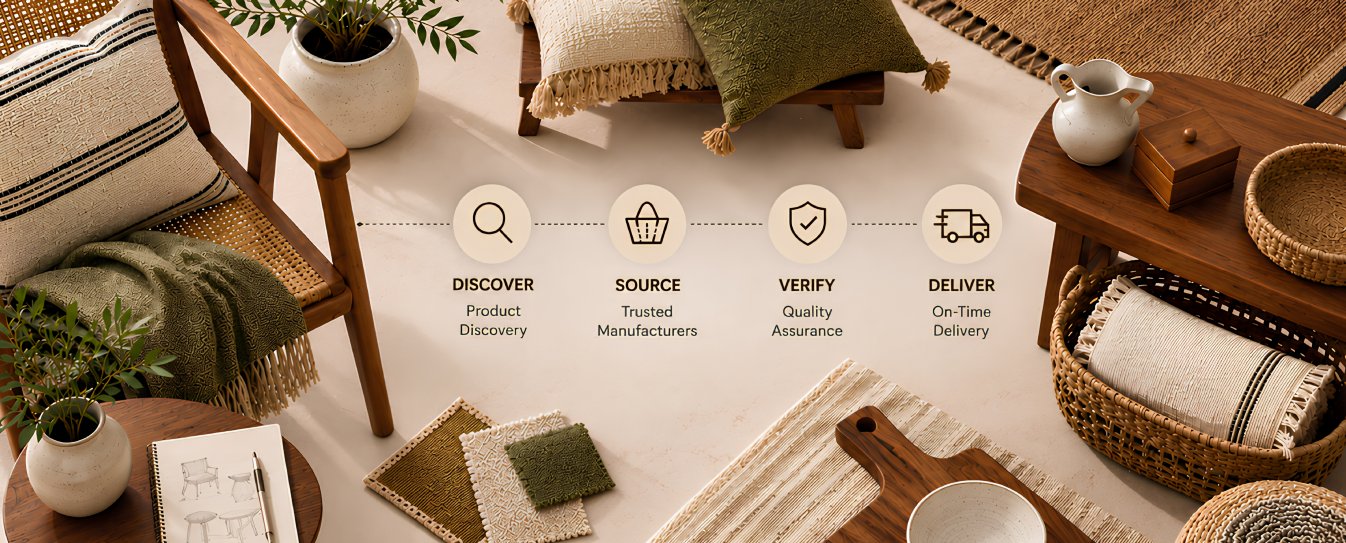
Global Sourcing Partner: From Product Discovery to Delivery
Understanding the Global Sourcing Journey from Start to Finish
For retailers, wholesalers, importers and homeware brands, international sourcing involves much more than finding a supplier at a competitive price. It can involve product discovery, supplier selection, product development, sampling, costing, procurement, production, quality control and logistics.
Managing these stages across international markets can be challenging, particularly when buyers are working with unfamiliar suppliers or sourcing products across different countries and categories. Each stage requires clear communication, informed decision-making and close coordination to ensure that the final product meets commercial, quality and delivery requirements. A global sourcing partner can bring these activities together, supporting buyers throughout the sourcing journey rather than simply connecting them with a manufacturer.

What Is a Global Sourcing Partner?
A global sourcing partner helps businesses identify, develop, procure and manage products from international manufacturing markets.
The role can extend across the entire sourcing process, from understanding the initial product requirement and identifying suitable suppliers to developing samples, negotiating costs, managing production, monitoring quality and coordinating delivery.
This is different from simply finding a supplier. The right manufacturing partner needs to have the appropriate capabilities, production capacity, quality standards and commercial fit for the buyer's requirements.
For international buyers, working with a sourcing partner can also provide a central point of coordination. Rather than managing separate conversations with manufacturers, product teams, quality inspectors and logistics providers, buyers can work with a team that understands the wider sourcing process.
Why Businesses Work with a Global Sourcing Partner
International sourcing can provide access to new products, materials, manufacturing capabilities and markets. However, managing an international supply chain also requires local knowledge and ongoing coordination.
Buyers need to assess whether suppliers can meet product specifications, production volumes and quality standards, while also considering costs, minimum order quantities, lead times, packaging, documentation and delivery.
This becomes more complex when sourcing across multiple product categories or countries. A sourcing partner can provide local support where the buyer does not have an established team in the manufacturing market. More importantly, the role can extend beyond supplier selection to managing the relationship and coordinating the process from the initial product requirement through to delivery.
The End-to-End Global Sourcing Journey
A typical sourcing project can follow a connected process:
Product Discovery → Supplier Identification → Product Development → Sampling → Costing & Procurement → Production & Quality Control → Logistics & Delivery
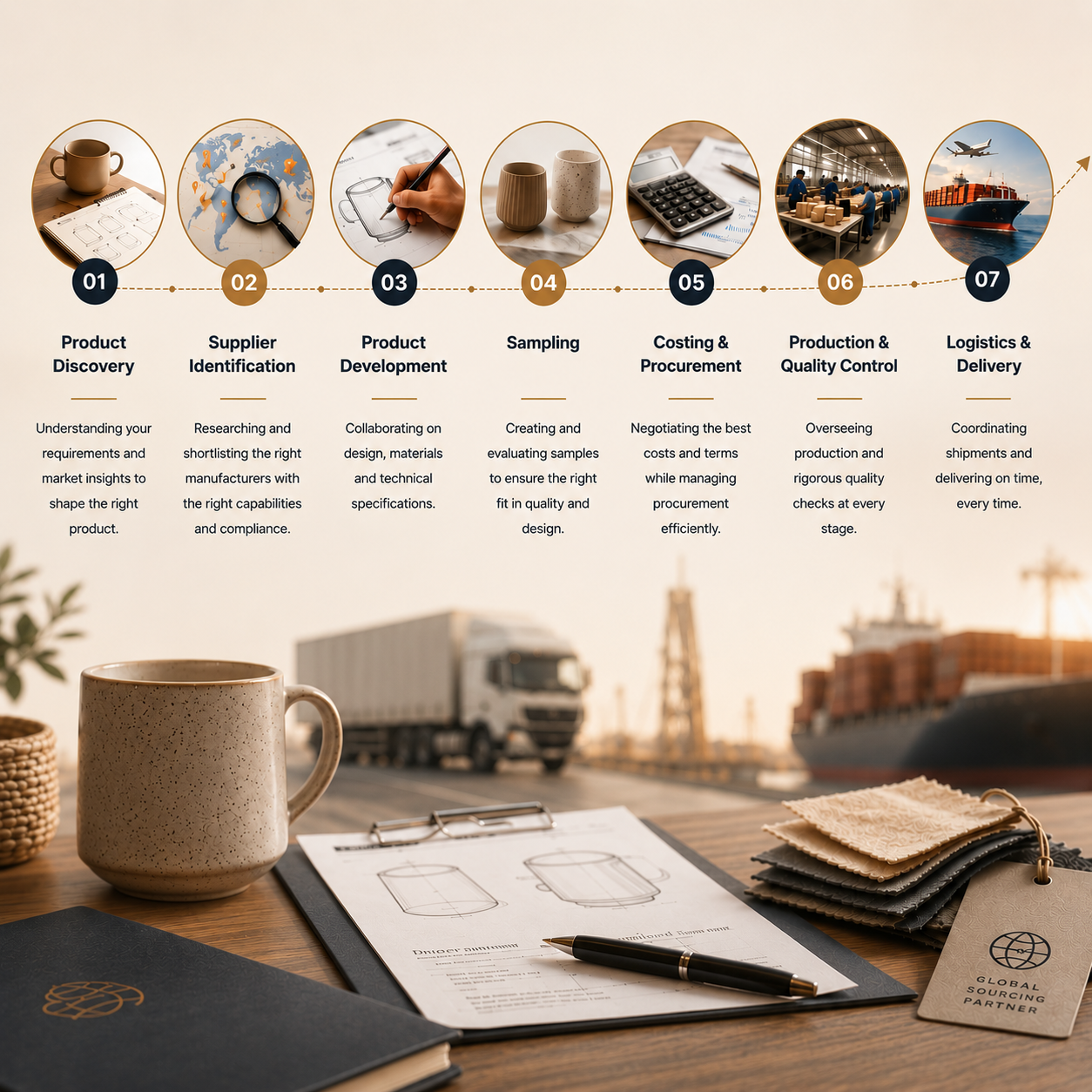
Each stage has a role to play in achieving the desired commercial and operational outcome.
1. Product Discovery
Sourcing often starts with a product idea, brief, seasonal requirement or gap in an existing range. Product discovery involves understanding the buyer's target market, customer and price point, while exploring suitable materials, manufacturing techniques, trends and customisation opportunities. A clear product brief helps ensure the right manufacturing capabilities are identified from the outset.
2. Supplier Identification and Evaluation
Finding the right manufacturer involves more than comparing prices. Suppliers should be assessed based on their manufacturing capabilities, production capacity, quality standards, lead times, minimum order quantities and ability to meet specific requirements. Supplier audits and local market knowledge can further help buyers select reliable and commercially suitable manufacturing partners.
3. Product Development
Many homeware products require development to meet specific requirements for dimensions, materials, colours, finishes, artwork or packaging. Product development transforms the initial concept into a clear manufacturing specification, ensuring that the product is practical to produce and aligned with the buyer's design, quality and commercial requirements.
4. Sampling
Sampling allows buyers to evaluate the proposed product before full production begins. Samples can be reviewed against the agreed specifications, including materials, dimensions, colour, finish, functionality and packaging. Once approved, the sample provides a clear reference for production and helps minimise the risk of inconsistencies or misunderstandings later in the process.
5. Costing, Negotiation and Procurement
Cost is an important consideration, but the lowest quotation does not always represent the best commercial option. Buyers should consider materials, manufacturing, packaging, order quantities, quality and delivery requirements when assessing costs. Once terms are agreed, accurate communication of specifications, quantities, approved samples and delivery requirements helps ensure a smooth transition into production.
6. Production and Quality Control
Production needs to remain aligned with the approved specifications, quantities and delivery schedule. Ongoing quality control can include production inspections, testing, specification checks and pre-shipment inspections to identify and address issues before goods leave the manufacturing site. Early identification of problems can help reduce disruption and avoid issues being discovered after delivery.
7. Logistics and Delivery
Once production and quality checks are complete, the goods need to be transported to the buyer. International logistics can involve shipment planning, freight coordination, documentation, customs, tracking and delivery arrangements. Keeping logistics connected to the sourcing process helps maintain continuity and allows potential delays or documentation issues to be managed efficiently.
Global Sourcing Partner vs Sourcing Agent
The terms sourcing agent and sourcing partner are sometimes used interchangeably, but they can describe different levels of service.
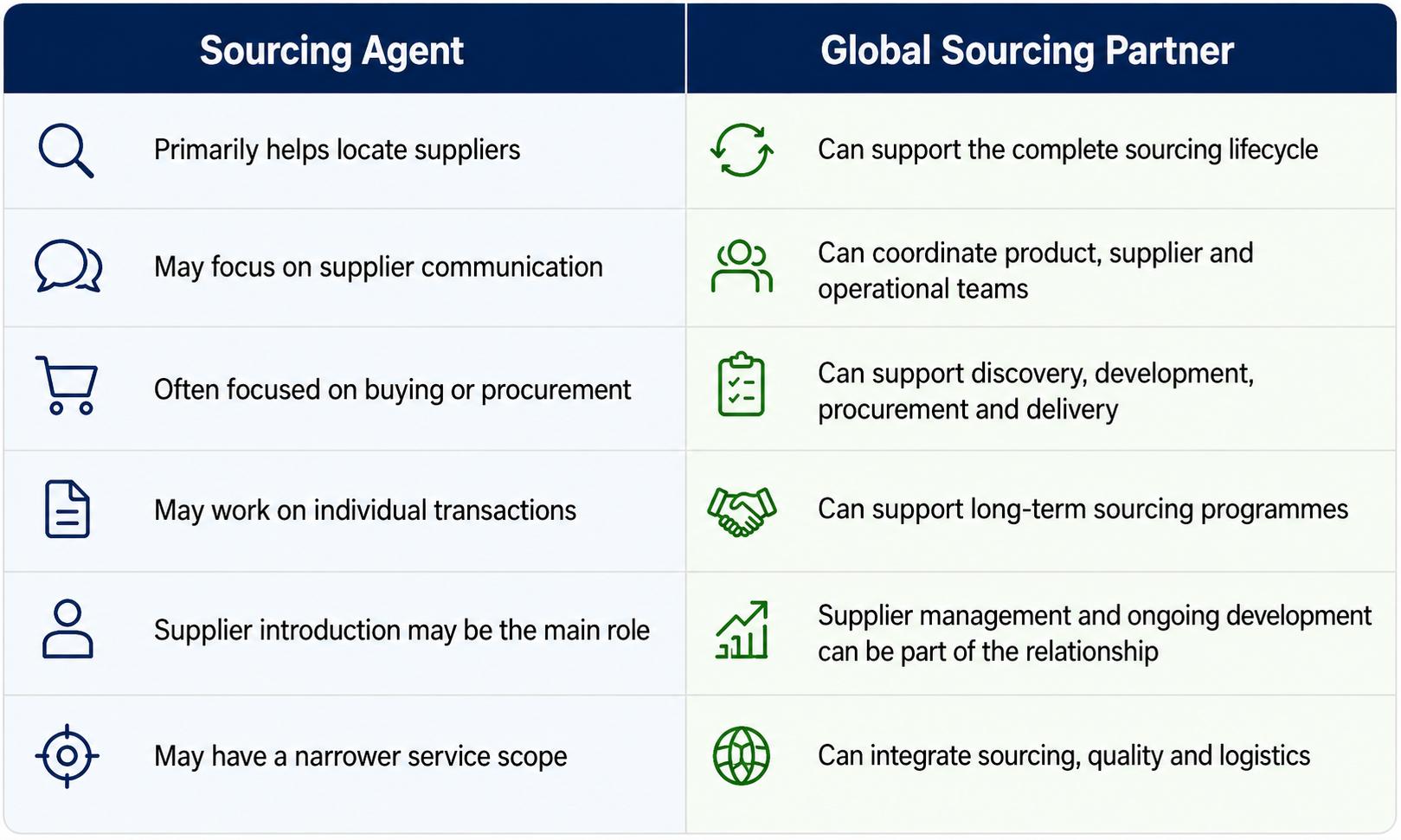
The distinction is not universal, as sourcing companies offer different services. However, the term global sourcing partner generally suggests a broader relationship that extends beyond supplier introduction or individual purchasing requirements.
Why Long-Term Sourcing Partnerships Matter
International sourcing can become more efficient when a sourcing team develops a deeper understanding of the buyer's business.
Over time, a sourcing partner can become familiar with the buyer's product standards, target customers, preferred materials, pricing expectations, packaging requirements, quality standards and seasonal timelines.
This knowledge can make future supplier selection and product development more focused. It can also allow sourcing to become part of a broader commercial strategy rather than a series of individual supplier searches.
A long-term relationship can provide continuity across product development, procurement, supplier management and quality control, while giving the sourcing team a clearer understanding of the buyer's evolving requirements.
Why 3SGlobal Positions Itself as a Global Sourcing Partner
3SGlobal's approach extends beyond supplier identification, bringing together strategic sourcing, product development, bespoke design and range support, quality management and global logistics.
Founded in 2001, the company initially focused on helping international homeware retailers access India's manufacturing capabilities. It has since developed a broader international sourcing network supporting home and lifestyle brands across multiple markets.
3SGlobal has 25+ years of experience, 100+ people worldwide and eight sourcing hubs.
Its sourcing model covers the wider journey from product requirement to delivery, including strategic sourcing and vendor development, product development and technical support, quality management and logistics coordination. For buyers, this means the sourcing relationship can extend across the different stages involved in international product development and procurement - from identifying the right product and manufacturing capability through to quality control and delivery.
Frequently Asked Questions
What is a global sourcing partner?
A global sourcing partner helps businesses manage international sourcing across multiple stages, including product discovery, supplier identification, product development, procurement, production, quality control and logistics.
What does a global sourcing partner do?
Depending on the scope of services, a sourcing partner can identify suppliers, support product development, arrange sampling, negotiate costs, coordinate procurement, monitor production, carry out quality checks and support delivery.
How can a sourcing partner help find suppliers?
A sourcing partner can use its supplier network, local market knowledge and supplier evaluation processes to identify manufacturers that match the buyer's product, quality, volume and commercial requirements.
Can a sourcing partner support product development?
Yes. Depending on the provider, support may include product specifications, materials, design development, sampling, packaging and range development.
How does a sourcing partner manage quality control?
Quality management may include supplier audits, production inspections, product testing, specification checks and pre-shipment inspections. The aim is to identify and address potential issues before goods are dispatched.
Can a sourcing partner manage production and delivery?
Depending on the agreed scope of services, a full-service sourcing partner can coordinate communication with manufacturers during production and provide support for quality control and logistics through to delivery.

 Privacy Policy
›
Privacy Policy
›